Why have blood tests if I feel well?
Some health risks, including high cholesterol or raised blood sugar, may develop without obvious symptoms. Screening looks for relevant risks before they become noticeable; testing for an existing symptom answers a different question. Your age, family history, medicines and previous results help determine what is useful. A package is a starting point for that discussion, not a complete check of every disease.
What do blood count, glucose and cholesterol measure?
A complete blood count looks at red cells, white cells and platelets, helping assess issues such as anaemia. Glucose measures blood sugar at collection; HbA1c reflects the average over roughly three months. Cholesterol and triglycerides contribute to cardiovascular risk assessment. These are different questions, which is why a general screening panel combines several types of marker.
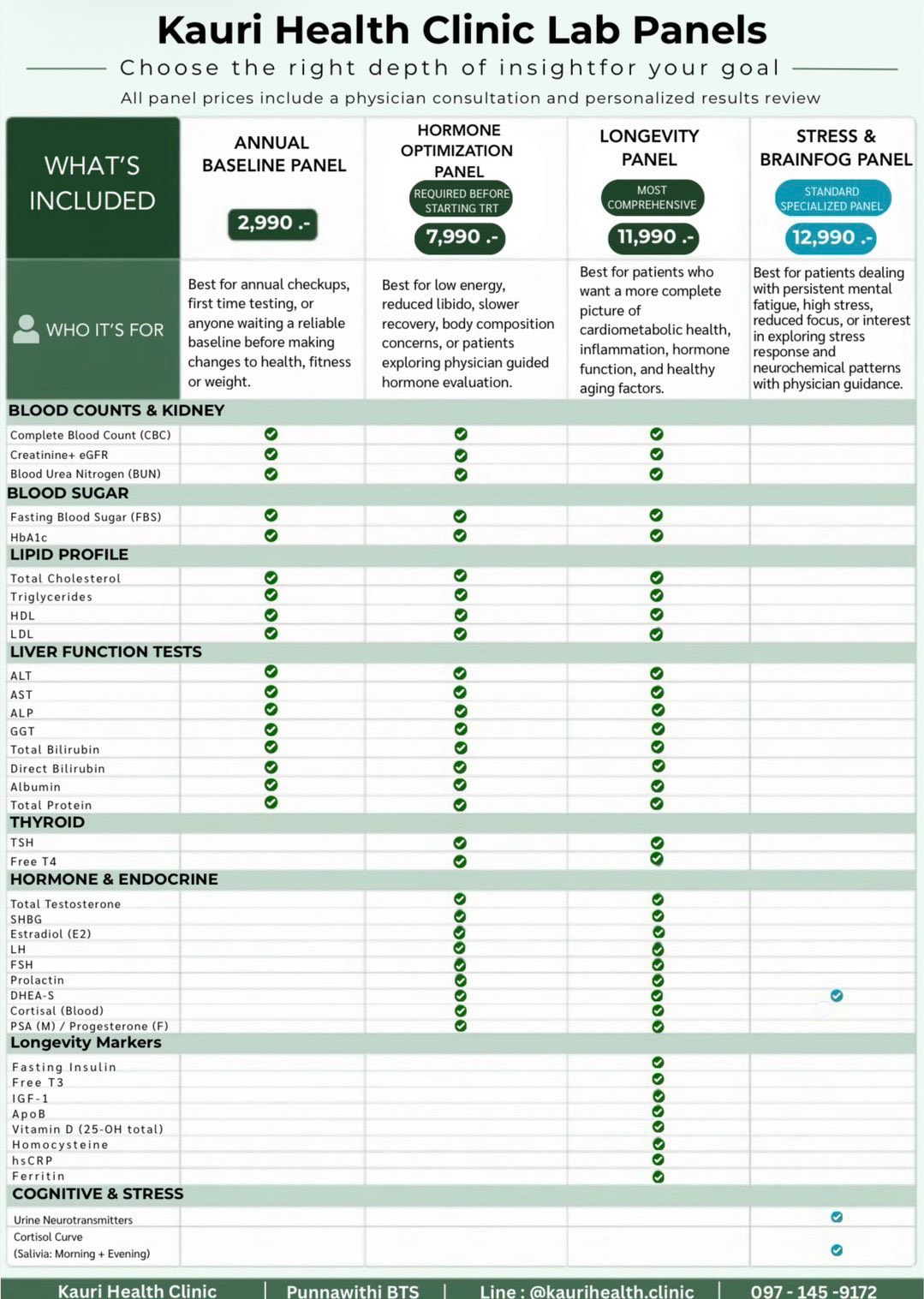
Which of Kauri's four packages fits my goal?
Annual Baseline focuses on core general-health markers. Hormone Optimization adds thyroid and hormone assessment. Longevity expands the metabolic and cardiovascular marker selection. Stress & Brain Fog is a separate focused selection, not the other three panels combined. If fatigue or poor concentration is your main concern, explain the symptom first so testing can address likely causes rather than a package name alone.
Can I drink water before a fasting blood test?
Plain water is usually allowed when fasting is requested. Food, sweetened drinks and coffee are not interchangeable with water. The required fasting period depends on the ordered tests, so use the instructions supplied for your booking. Tell the team if you have diabetes or take medicines that depend on meals; do not adjust treatment on your own.
What happens if a result is outside the reference range?
A flagged result needs interpretation, not an automatic diagnosis. The degree of change, related markers, symptoms and previous results all matter. Your review may lead to practical lifestyle changes, a repeat test or a focused investigation. Repeat-testing intervals depend on the finding and your risk; every marker does not need to be repeated on the same annual schedule.